• Skip to primary navigation
  • Skip to main content
  • Skip to primary sidebar
  • Skip to footer
  • Home
  • About
  • The Magazine
  • Events
  • Partners
  • Products
  • Contact
  • Jobs and Careers
  • Advertise
  • Facebook
  • Instagram
  • Twitter
  • Subscribe
American Police Beat

American Police Beat Magazine

Law Enforcement Publication

  • Home
  • Leadership
    • Understanding the boundaries of professional relationships with the...
      Why you should lead from 30,000 feet
      Public perception and trust
      When performance reviews are a waste of time
      Taking a page from Toyota’s playbook
  • Topics
    • Leadership
      • Understanding the boundaries of professional relationships with the...
        Why you should lead from 30,000 feet
        Public perception and trust
        When performance reviews are a waste of time
        Taking a page from Toyota’s playbook
    • Editor’s Picks
      • Let’s get moving!
        Heroes of the World Trade Center
        The Promise Gap
        Corruption, collusion and impunity
        Liability challenges in contemporary policing
    • On the Job
      • Frankpledge to forensics: A brief history of law enforcement
        Villains and heroes in the Big Apple
        Right place, right time — again
        Some good news on crime
        Mom-to-be named Cop of the Year
    • Labor
      • The Promise Gap
        Cut the cops, save a dollar?
        Labor release under fire
        Who’s watching the watchmen?
        Crime and punishment (or lack thereof) in Seattle
    • Tech
      • New Mexico license plate readers save lives, lead to “precise...
        A modern field guide to understanding research in policing
        Gear that moves with you
        A new breed of cop car
        The future of patrol is here
    • Training
      • Pushback as a training signal
        Let’s get moving!
        The five minutes before the ambulance
        Navigating danger
        Critical thinking in police training
    • Policy
      • Corruption, collusion and impunity
        E-bikes spark public safety concerns
        Try racing without wheels
        Law enforcement accreditation: Why it matters
        Liability challenges in contemporary policing
    • Health/Wellness
      • Addressing stress, vicarious trauma and burnout
        Nervous system regulation
        The nature of the job
        Promoting organizational wellness
        Telling cops to get more sleep isn’t working
    • Community
      • Improving autism awareness
        Shop with a Cop
        Community engagement: What is it moving forward?
        Contradictory crossroads
        Back-to-school season brings out police support nationwide
    • Offbeat
      • An unexpected burglar
        Police humor only a cop would understand
        Not eggzactly a perfect heist
        Pizza … with a side of alligator?
        Wisconsin man charged with impersonating Border Patrol agent twice in...
    • We Remember
      • Heroes of the World Trade Center
        Forty heroes: United Airlines Flight 93
        The Pentagon
        A nation propelled to war, lives changed forever
        A Christmas loss
    • HOT Mail
      • The War on Cops Continues Unabated
  • On the Job
    • Frankpledge to forensics: A brief history of law enforcement
      Villains and heroes in the Big Apple
      Right place, right time — again
      Some good news on crime
      Mom-to-be named Cop of the Year
  • Labor
    • The Promise Gap
      Cut the cops, save a dollar?
      Labor release under fire
      Who’s watching the watchmen?
      Crime and punishment (or lack thereof) in Seattle
  • Tech
    • New Mexico license plate readers save lives, lead to “precise...
      A modern field guide to understanding research in policing
      Gear that moves with you
      A new breed of cop car
      The future of patrol is here
  • Training
    • Pushback as a training signal
      Let’s get moving!
      The five minutes before the ambulance
      Navigating danger
      Critical thinking in police training
  • Policy
    • Corruption, collusion and impunity
      E-bikes spark public safety concerns
      Try racing without wheels
      Law enforcement accreditation: Why it matters
      Liability challenges in contemporary policing
  • Health/Wellness
    • Addressing stress, vicarious trauma and burnout
      Nervous system regulation
      The nature of the job
      Promoting organizational wellness
      Telling cops to get more sleep isn’t working
  • Community
    • Improving autism awareness
      Shop with a Cop
      Community engagement: What is it moving forward?
      Contradictory crossroads
      Back-to-school season brings out police support nationwide
  • Offbeat
    • An unexpected burglar
      Police humor only a cop would understand
      Not eggzactly a perfect heist
      Pizza … with a side of alligator?
      Wisconsin man charged with impersonating Border Patrol agent twice in...
  • We Remember
    • Heroes of the World Trade Center
      Forty heroes: United Airlines Flight 93
      The Pentagon
      A nation propelled to war, lives changed forever
      A Christmas loss
  • HOT Mail
    • The War on Cops Continues Unabated
  • About
  • The Magazine
  • Events
  • Partners
  • Products
  • Contact
  • Jobs and Careers
  • Advertise
  • Subscribe
Search

Health/Wellness

Wellness for warriors: C.O.P.S. can help

Sara Slone Published September 15, 2025 @ 12:07 pm PDT

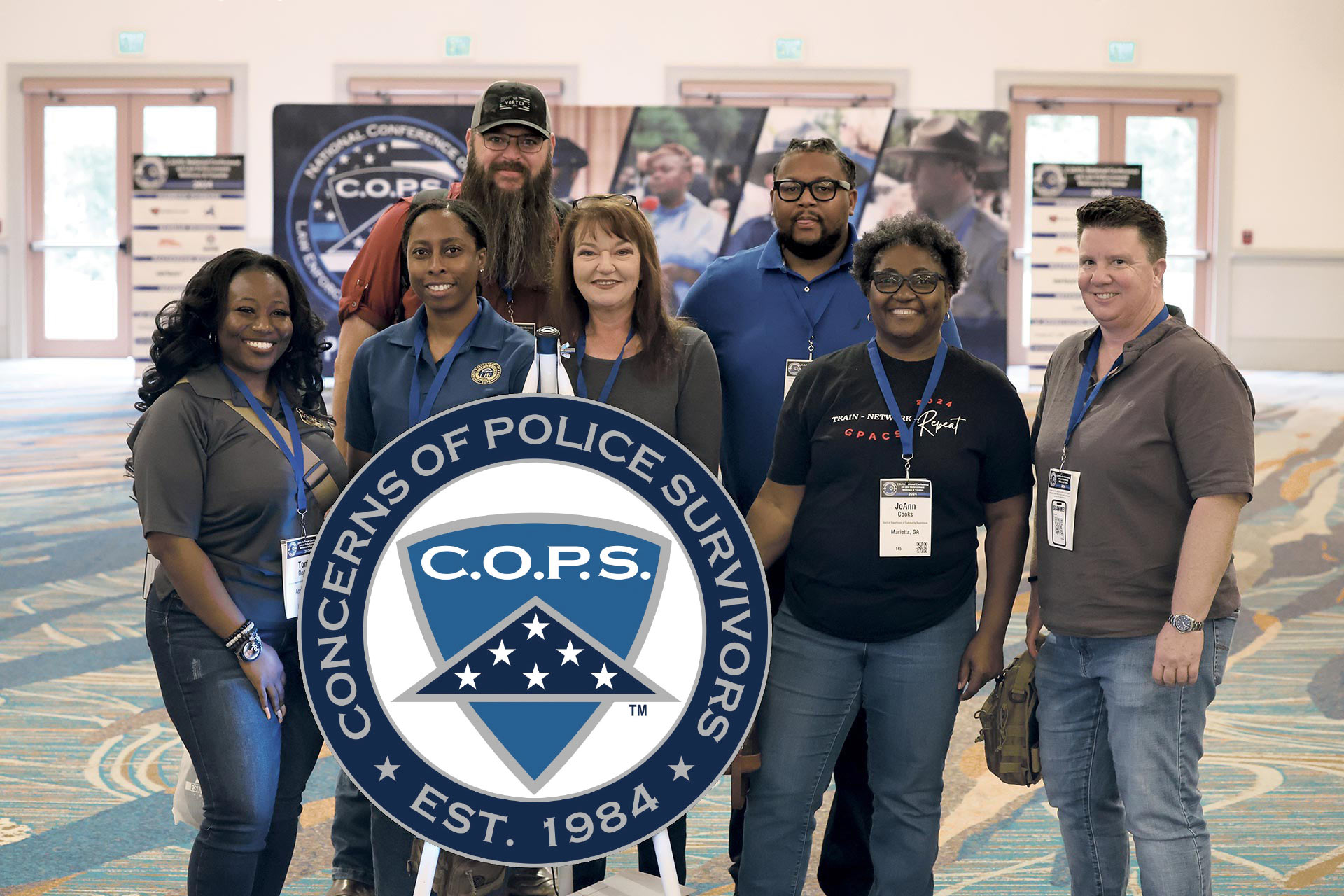
C.O.P.S.

C.O.P.S. has supported and served surviving family members and co-workers for over four decades. We now serve over 85,000 survivors nationwide. What you may not realize is the resources we offer for preparing first responders for critical incidents and how to navigate a healthy career in law enforcement. Offering trainings and an entire wellness conference is a vital part of what C.O.P.S. does each year.

Dan Phillips, a retired U.S. marshal, has been involved with C.O.P.S. in several capacities. In an online post from August 6, Phillips said, “So many of us in our careers hit a point where we can’t see a way out of the madness and pain, but to give up in that moment (as so many do), means we aren’t training or teaching the right way.”

The average person experiences two to three traumatic incidents in their lifetime. First responders experience an average of 180 critical or traumatic incidents during their career. Not only are they coping with their own experiences, they are losing friends and co-workers to suicide at a rapid rate.

“When we remember that they were overwhelmed, not selfish or uncaring, we begin to shift from confusion to compassion.”

“I can now say that I’ve lost 14 friends to suicide, almost three times the amount to line-of-duty death. That is unacceptable,” Phillips said. “We cannot train our recruits as cops to be warriors and then not train them how to deal with the hurt and heartache of the job and life.”

In the past decade, C.O.P.S. has taken the initiative to shed light on health and wellness even further through the annual National Conference on Law Enforcement Wellness and Trauma, where police suicide is a main topic of discussion. This conference not only takes steps to help officers with their own thoughts of suicide and mental health, but it is also meant to help officers cope with the loss of their friends who have died by suicide.

Amy Morgan is a certified trainer for Applied Suicide Intervention Skills Training (ASIST). Morgan has worked with law enforcement officers for many years, specifically with cases of loss due to suicide. 

“When the loss is due to suicide, grief becomes even heavier. It brings confusion, unanswered questions, and feelings of hurt, abandonment or even betrayal,” Morgan said. “Trying to understand why someone ended their life is often an impossible task. We view their decision through our own perspective — our experiences, our healing, our capacity for hope. But they were seeing life through a lens clouded by pain, fatigue and hopelessness.”

Learning the signs of suicide can make a difference, and preparing your agency is the first step. At the C.O.P.S. National Conference, you will receive tools and resources to get a plan in place for both prevention and response. In the event your agency loses an officer to suicide, response to the surviving family members is vital.

Morgan explained that both surviving family members and co-workers will experience the loss differently, but feelings of regret and trying to make sense of the death are the most common responses. “They didn’t give up on you — they gave up on themselves, because they couldn’t see any other way forward,” Morgan said. “This understanding doesn’t take away the pain, but it offers a place to start. It reminds us to look for warning signs, to offer practical help and to stay connected. When we remember that they were overwhelmed, not selfish or uncaring, we begin to shift from confusion to compassion — for them and for ourselves.”

The C.O.P.S. National Conference on Law Enforcement Wellness and Trauma is being hosted in New Orleans, Louisiana, November 13–16. If you are unable to make it to the conference this year, consider attending one of the free Traumas of Law Enforcement trainings in 2026. These trainings are held nine times each year, in different locations. The three-day training covers topics such as responding to critical incidents, health and wellness, peer support and warning signs of police suicide. Yes, we talk about suicide. Because far too many officers have taken their own lives, and the conversation needs to be had.

On behalf of everyone at C.O.P.S., know that you are not alone in your struggles. And healing, while difficult, is possible. If you are a member of a law enforcement family, or an officer yourself, please do not wait until tragedy happens to reach out for the tools C.O.P.S. can offer. A strong support system is just a phone call or email away, and we look forward to connecting with you.

To register for the National Conference or for more information, visit concernsofpolicesurvivors.org/national-conference.

Sara Slone

Sara Slone

Sara Slone is the outreach director for Concerns of Police Survivors (C.O.P.S.).

View articles by Sara Slone

As seen in the September 2025 issue of American Police Beat magazine.
Don’t miss out on another issue today! Click below:


SUBSCRIBE TODAY!

Categories: Health/Wellness

Primary Sidebar

Recent Articles

  • Frankpledge to forensics: A brief history of law enforcement
  • Pushback as a training signal
  • Let’s get moving!
  • Heroes of the World Trade Center
  • The Promise Gap
  • Corruption, collusion and impunity
  • The five minutes before the ambulance
  • New Mexico license plate readers save lives, lead to “precise policing”
  • Addressing stress, vicarious trauma and burnout
  • Understanding the boundaries of professional relationships with the boss

Footer

Our Mission
To serve as a trusted voice of the nation’s law enforcement community, providing informative, entertaining and inspiring content on interesting and engaging topics affecting peace officers today.

Contact us: info@apbweb.com | (800) 234-0056.

  • Facebook
  • Instagram
  • Twitter

Categories

  • Editor’s Picks
  • On the Job
  • Labor
  • Tech
  • Training
  • Policy
  • Health/Wellness
  • Community
  • Offbeat
  • We Remember
  • Jobs and Careers
  • Events

Editor’s Picks

Let’s get moving!

Let’s get moving!

April 27, 2026

Heroes of the World Trade Center

Heroes of the World Trade Center

April 24, 2026

The Promise Gap

The Promise Gap

April 22, 2026

Corruption, collusion and impunity

Corruption, collusion and impunity

April 21, 2026

Policies | Consent Preferences | Copyright © 2026 APB Media, LLC | Website design, development and maintenance by 911MEDIA

Open

Subscribe

Close

Receive the latest news and updates from American Police Beat directly to your inbox!

  • This field is for validation purposes and should be left unchanged.