• Skip to primary navigation
  • Skip to main content
  • Skip to primary sidebar
  • Skip to footer
  • Home
  • About
  • The Magazine
  • Events
  • Partners
  • Products
  • Contact
  • Jobs and Careers
  • Advertise
  • Facebook
  • Instagram
  • Twitter
  • Subscribe
American Police Beat

American Police Beat Magazine

Law Enforcement Publication

  • Home
  • Leadership
    • Clarifying your “true north”
      The job has changed — have you?
      Perpetual recognition of line-of-duty deaths
      Understanding the boundaries of professional relationships with the...
      Why you should lead from 30,000 feet
  • Topics
    • Leadership
      • Clarifying your “true north”
        The job has changed — have you?
        Perpetual recognition of line-of-duty deaths
        Understanding the boundaries of professional relationships with the...
        Why you should lead from 30,000 feet
    • Editor’s Picks
      • Let’s get moving!
        Heroes of the World Trade Center
        The Promise Gap
        Corruption, collusion and impunity
        Liability challenges in contemporary policing
    • On the Job
      • Testing the waters — literally
        Frankpledge to forensics: A brief history of law enforcement
        Villains and heroes in the Big Apple
        Right place, right time — again
        Some good news on crime
    • Labor
      • Smile and let them swing
        The Promise Gap
        Cut the cops, save a dollar?
        Labor release under fire
        Who’s watching the watchmen?
    • Tech
      • New Mexico license plate readers save lives, lead to “precise...
        A modern field guide to understanding research in policing
        Gear that moves with you
        A new breed of cop car
        The future of patrol is here
    • Training
      • Pushback as a training signal
        Let’s get moving!
        The five minutes before the ambulance
        Navigating danger
        Critical thinking in police training
    • Policy
      • Police pause license plate readers
        Corruption, collusion and impunity
        E-bikes spark public safety concerns
        Try racing without wheels
        Law enforcement accreditation: Why it matters
    • Health/Wellness
      • The days that follow
        Addressing stress, vicarious trauma and burnout
        Nervous system regulation
        The nature of the job
        Promoting organizational wellness
    • Community
      • Police officer kicks up social media praise
        Donning denim in solidarity with victims and survivors of sexual...
        Improving autism awareness
        Shop with a Cop
        Community engagement: What is it moving forward?
    • Offbeat
      • An unexpected burglar
        Police humor only a cop would understand
        Not eggzactly a perfect heist
        Pizza … with a side of alligator?
        Wisconsin man charged with impersonating Border Patrol agent twice in...
    • We Remember
      • A Tribute to Fallen Heroes
        Markers of service and remembrance
        Tragedy strikes Baker to Vegas
        Heroes of the World Trade Center
        Forty heroes: United Airlines Flight 93
    • HOT Mail
      • The War on Cops Continues Unabated
  • On the Job
    • Testing the waters — literally
      Frankpledge to forensics: A brief history of law enforcement
      Villains and heroes in the Big Apple
      Right place, right time — again
      Some good news on crime
  • Labor
    • Smile and let them swing
      The Promise Gap
      Cut the cops, save a dollar?
      Labor release under fire
      Who’s watching the watchmen?
  • Tech
    • New Mexico license plate readers save lives, lead to “precise...
      A modern field guide to understanding research in policing
      Gear that moves with you
      A new breed of cop car
      The future of patrol is here
  • Training
    • Pushback as a training signal
      Let’s get moving!
      The five minutes before the ambulance
      Navigating danger
      Critical thinking in police training
  • Policy
    • Police pause license plate readers
      Corruption, collusion and impunity
      E-bikes spark public safety concerns
      Try racing without wheels
      Law enforcement accreditation: Why it matters
  • Health/Wellness
    • The days that follow
      Addressing stress, vicarious trauma and burnout
      Nervous system regulation
      The nature of the job
      Promoting organizational wellness
  • Community
    • Police officer kicks up social media praise
      Donning denim in solidarity with victims and survivors of sexual...
      Improving autism awareness
      Shop with a Cop
      Community engagement: What is it moving forward?
  • Offbeat
    • An unexpected burglar
      Police humor only a cop would understand
      Not eggzactly a perfect heist
      Pizza … with a side of alligator?
      Wisconsin man charged with impersonating Border Patrol agent twice in...
  • We Remember
    • A Tribute to Fallen Heroes
      Markers of service and remembrance
      Tragedy strikes Baker to Vegas
      Heroes of the World Trade Center
      Forty heroes: United Airlines Flight 93
  • HOT Mail
    • The War on Cops Continues Unabated
  • About
  • The Magazine
  • Events
  • Partners
  • Products
  • Contact
  • Jobs and Careers
  • Advertise
  • Subscribe
Search

Training

Present ability, opportunity and apparent intent

Scott Savage Published January 18, 2023 @ 6:00 am PST

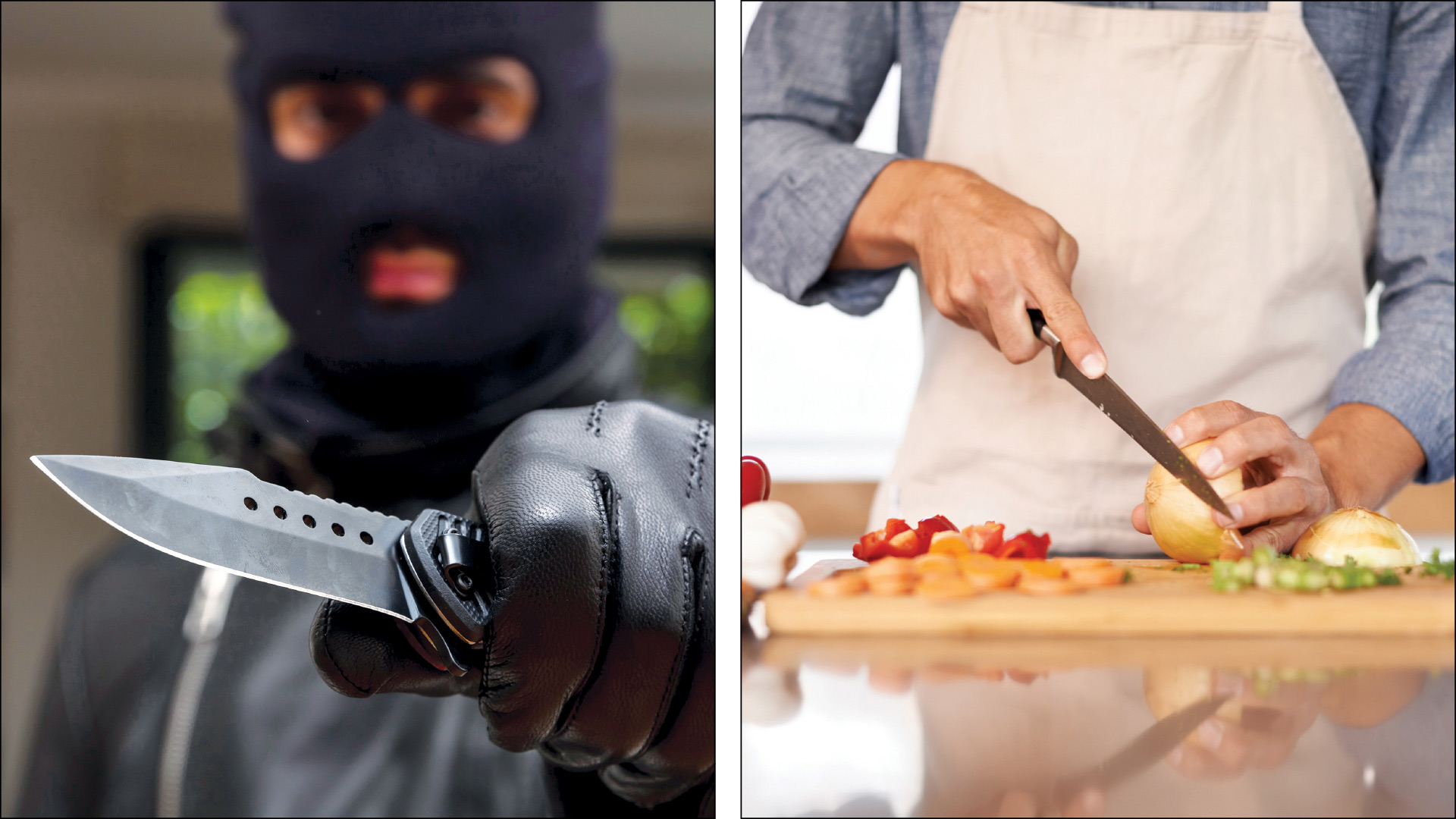
Hostile intent makes all the difference between these two situations. (iStock.com/Rawf8 and iStock.com/PeopleImages)

In this article, we’ll look at a way to evaluate threats when responding to a crisis. Whether operating as a solo patrol officer or serving as the incident commander of a large-scale incident, law enforcement officers must routinely decide if a suspect is a threat, and if so, to what degree. An officer’s understanding of the threat posed by a suspect is what should inform and shape use-of-force decision-making. This may be an individual officer deciding on what level of force to use or an incident commander deciding when and under what circumstances to engage a barricaded suspect. A basic concept useful in that assessment process is understanding terms like present ability, opportunity and apparent intent.

Present ability

To understand present ability, let’s consider an angry suspect who tells an officer, “I’m going to kill you!” Clearly, the suspect possesses hostile intent, which he has revealed in his statement. To properly assess his threat level, though, we must also consider how plausible it is that the suspect presently possesses the ability to carry out his threat. If that suspect is, for example, a feeble elderly man confined to a hospital bed, then it doesn’t seem likely that he has the ability to carry out his threat. First, the invalid seems to lack the ability to get out of his bed, and second, he lacks the physical capability to cause the harm he has threatened. 

Opportunity

To understand opportunity, please imagine you are a police officer patrolling the Grand Canyon National Park in Arizona. You receive a call that a suspect armed with a large metal pipe is angrily yelling about wanting to assault people. You arrive and locate the man, who is indeed armed with a pipe and yelling. The suspect is standing all alone on one side of the vast canyon, and you are on the other. Only through powerful binoculars are you able to see him. Even though the suspect has the hostile intent (yelling that he wants to assault people) and the present ability (holding a large pipe), because he has no way of accessing you, he lacks the opportunity to act upon his intent. 

Apparent intent

Tactical guru Sid Heal defined hostile intent as “an antagonistic state of mind.” Understanding that concept may be easier if you consider the following example. Create a picture in your mind of “a man holding a knife.” Is he a threat? Well, if you pictured a stabbing suspect running down a crowded downtown street with that knife, then the answer is undoubtedly yes. If, however, when I asked you to picture a man with a knife, you thought of a chef standing in a restaurant kitchen cutting onions, then the answer is no, he is not a threat. What, then, is the difference? Both fit the definition of a “man with a knife,” but one had a malevolent attitude whereas the other did not. Consider now what might happen if the chef’s assistant suddenly announced that he has been sleeping with the chef’s wife! Suddenly the formerly peaceful chef may become enraged with his co-worker and decide he wants to stab him. The formerly peaceful chef is now a threat, not because of a change in the knife he was holding, but because of a change in his attitude and intention. With that example, we can understand intent. Applying this concept in the field, law enforcement officers can consider if the suspect has, through words or actions, demonstrated any hostile intent. For instance, has he acted violently toward anyone, expressed anger or made any verbal statements that indicate a malevolent attitude? Have there been previous calls for service at the suspect’s home where the suspect conveyed hostile intent? Does the reporting party or perhaps a family member have information about the suspect’s attitude? Also consider that the suspect may have hostile intent, but only toward one particular person.

Putting it all together

This threat assessment procedure may take place in a few seconds, such as when an individual officer is under attack, or over a prolonged period of time during a critical incident response. After properly determining the level of the threat, we can then attempt to influence one of those factors, such as negotiating with the suspect to cool his hostile intent, using force on him to degrade his ability to fight or removing the opportunity for him to access anyone he can harm. 

New laws in states like California contain the language of present ability, opportunity and apparent intent, so it’s vital that officers become familiar with this. Even if your state doesn’t yet have these terms codified in law, if you can explain them in a police report or in a court proceeding, you can help others to understand your use-of-force decision-making.

Scott Savage

Scott Savage

Scott Savage is an active-duty law enforcement officer in Northern California. He is also the founder of the Savage Training Group, a professional law enforcement training organization. For more information, go to savagetraininggroup.com.

View articles by Scott Savage

As seen in the January 2023 issue of American Police Beat magazine.
Don’t miss out on another issue today! Click below:


SUBSCRIBE TODAY!

Categories: Training

Primary Sidebar

Recent Articles

  • Police officer kicks up social media praise
  • Donning denim in solidarity with victims and survivors of sexual assault
  • Clarifying your “true north”
  • Smile and let them swing
  • The job has changed — have you?
  • New National Law Enforcement Museum exhibit revisits D.C. snipers case
  • A hero’s legacy through a mother’s love
  • The days that follow
  • Perpetual recognition of line-of-duty deaths
  • A Tribute to Fallen Heroes

Footer

Our Mission
To serve as a trusted voice of the nation’s law enforcement community, providing informative, entertaining and inspiring content on interesting and engaging topics affecting peace officers today.

Contact us: info@apbweb.com | (800) 234-0056.

  • Facebook
  • Instagram
  • Twitter

Categories

  • Editor’s Picks
  • On the Job
  • Labor
  • Tech
  • Training
  • Policy
  • Health/Wellness
  • Community
  • Offbeat
  • We Remember
  • Jobs and Careers
  • Events

Editor’s Picks

Let’s get moving!

Let’s get moving!

April 27, 2026

Heroes of the World Trade Center

Heroes of the World Trade Center

April 24, 2026

The Promise Gap

The Promise Gap

April 22, 2026

Corruption, collusion and impunity

Corruption, collusion and impunity

April 21, 2026

Policies | Consent Preferences | Copyright © 2026 APB Media, LLC | Website design, development and maintenance by 911MEDIA

Open

Subscribe

Close

Receive the latest news and updates from American Police Beat directly to your inbox!

  • This field is for validation purposes and should be left unchanged.